UAV Gimbal Housings for Camera Payloads Featured Image
  • Materials
    7075-T6 and 6061-T6
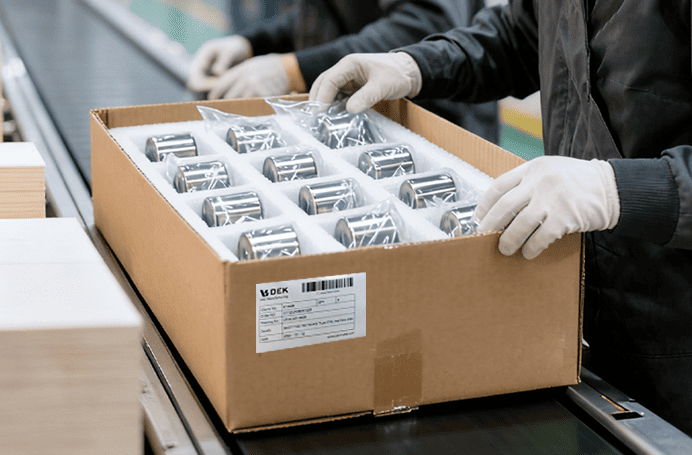
  • Supply
    Matched sets for assembly
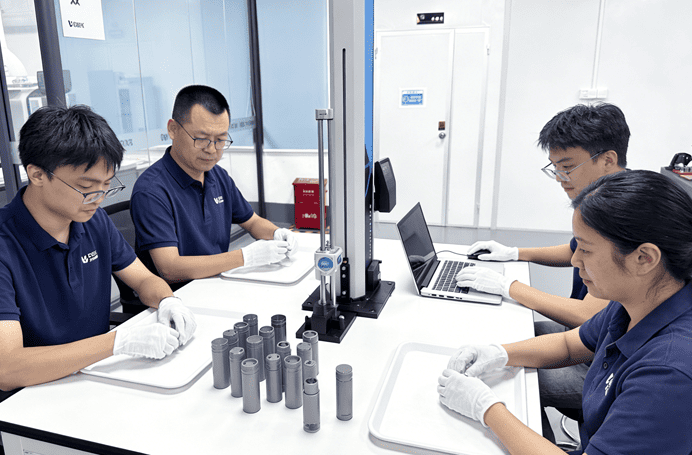
  • CMM inspection
    Coaxiality and flatness
  • Confidentiality
    NDA on request

Custom UAV Gimbal Housing Parts

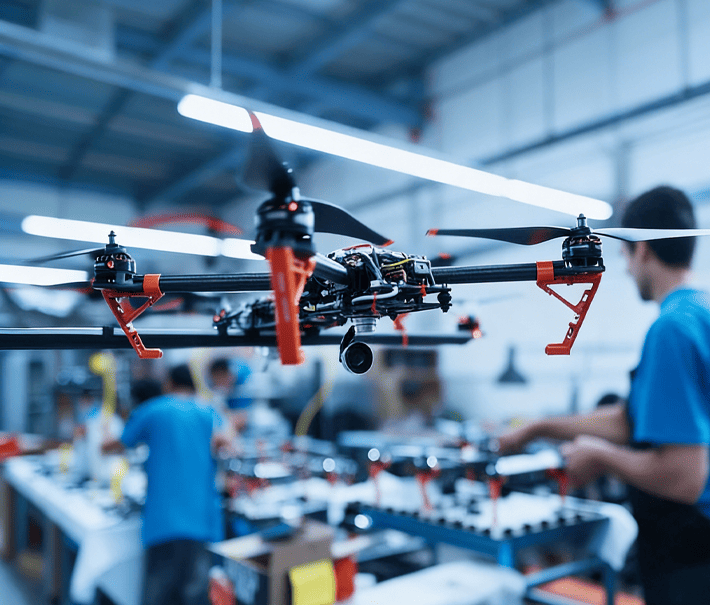
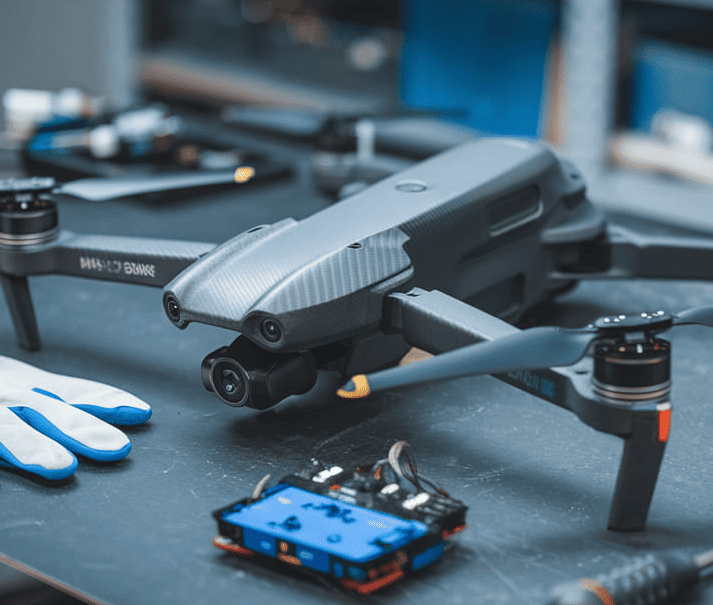
Our gimbal work is for UAV payloads: the 2-axis and 3-axis units that carry EO/IR, thermal, zoom, multispectral or LiDAR sensors on mapping, inspection and security aircraft.

Payload developers and UAV OEMs send us their drawings; we machine and inspect the parts as a set, from engineering prototypes and flight-test units to repeat production batches. Gimbal housings belong to our flight control and sensor components family; fixed camera brackets are covered by our drone camera mount frames.

Request a Quote
Product Intro Image

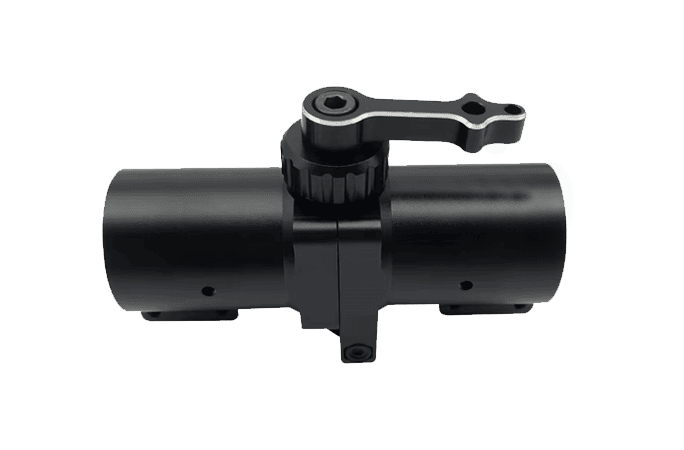
UAV gimbal housing components we machine

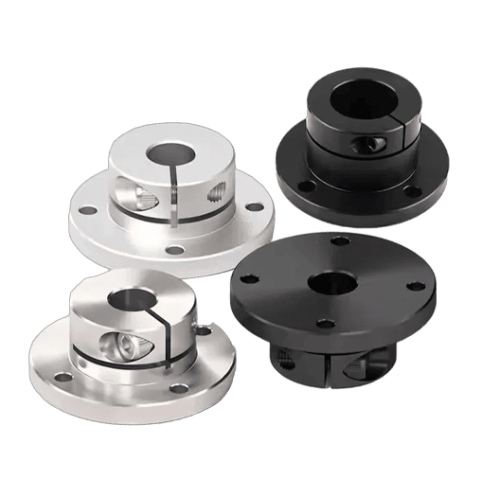
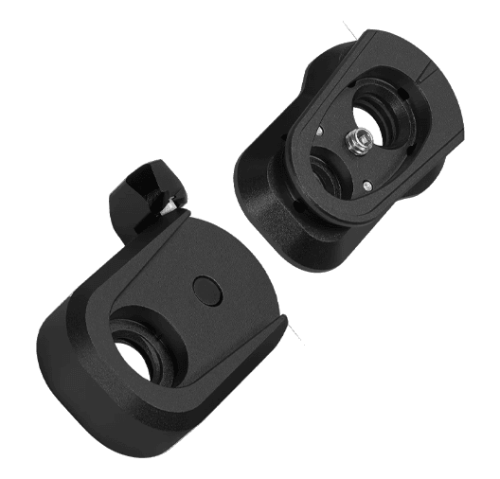
Housings and camera enclosures

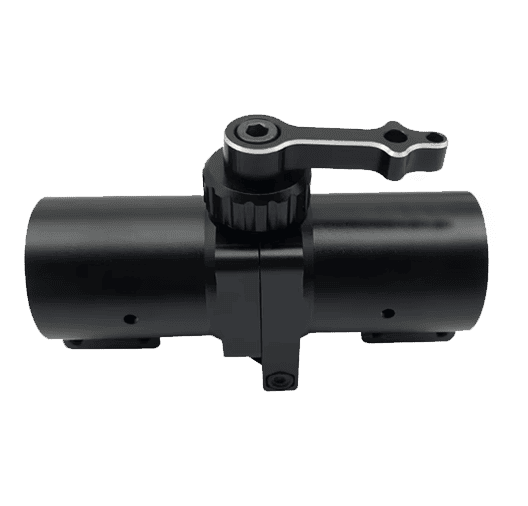
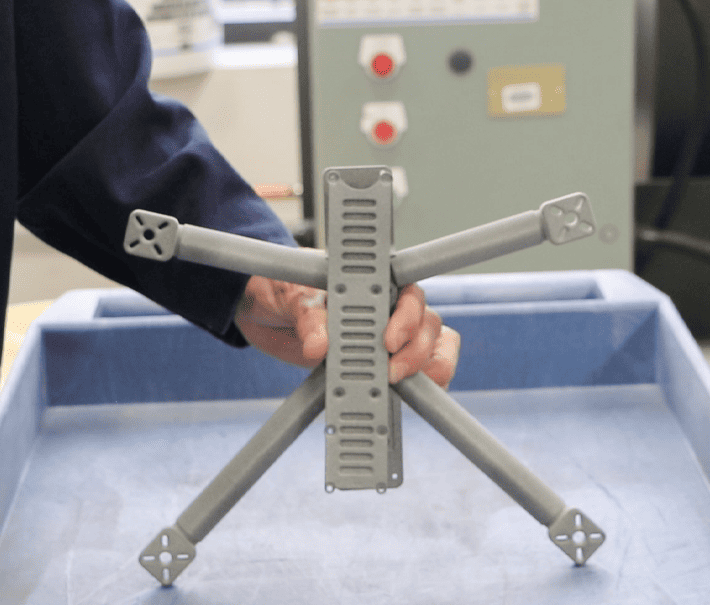
The main body that carries the camera or sensor block. It typically combines thin pocketed walls, sealing grooves, connector openings and an optical window seat, all located from the same datums as the bearing bores.

Request a quote
Yoke arms and frames

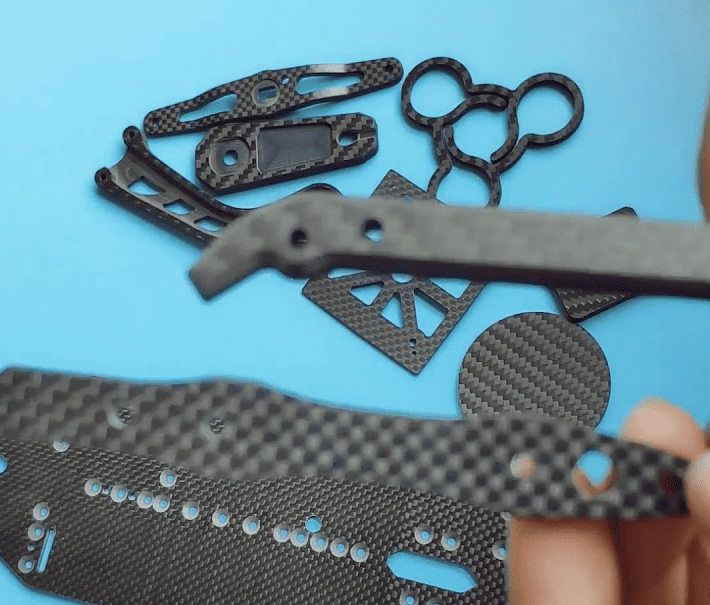
Roll and pitch yokes and U-frames that link the axes. They must be stiff enough not to deflect under the payload and light enough not to load the motors, which is why they are usually pocketed symmetrically from solid 7075.
Request a quote
Motor housings and bearing seats

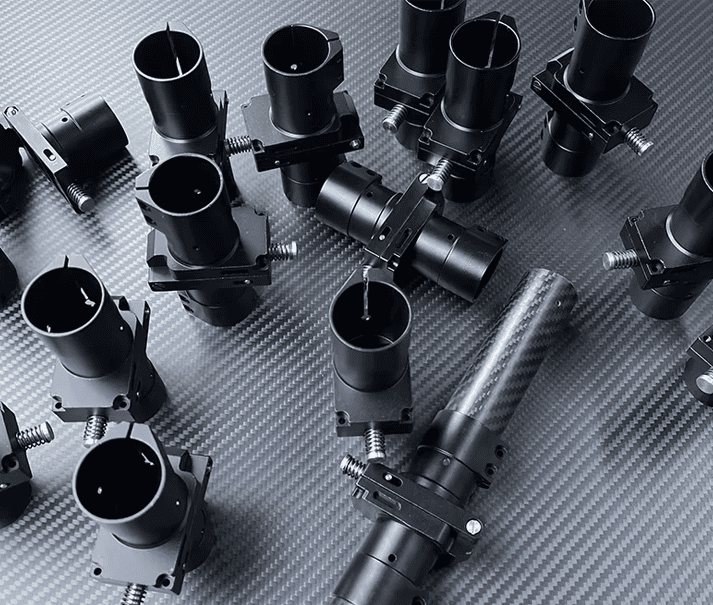
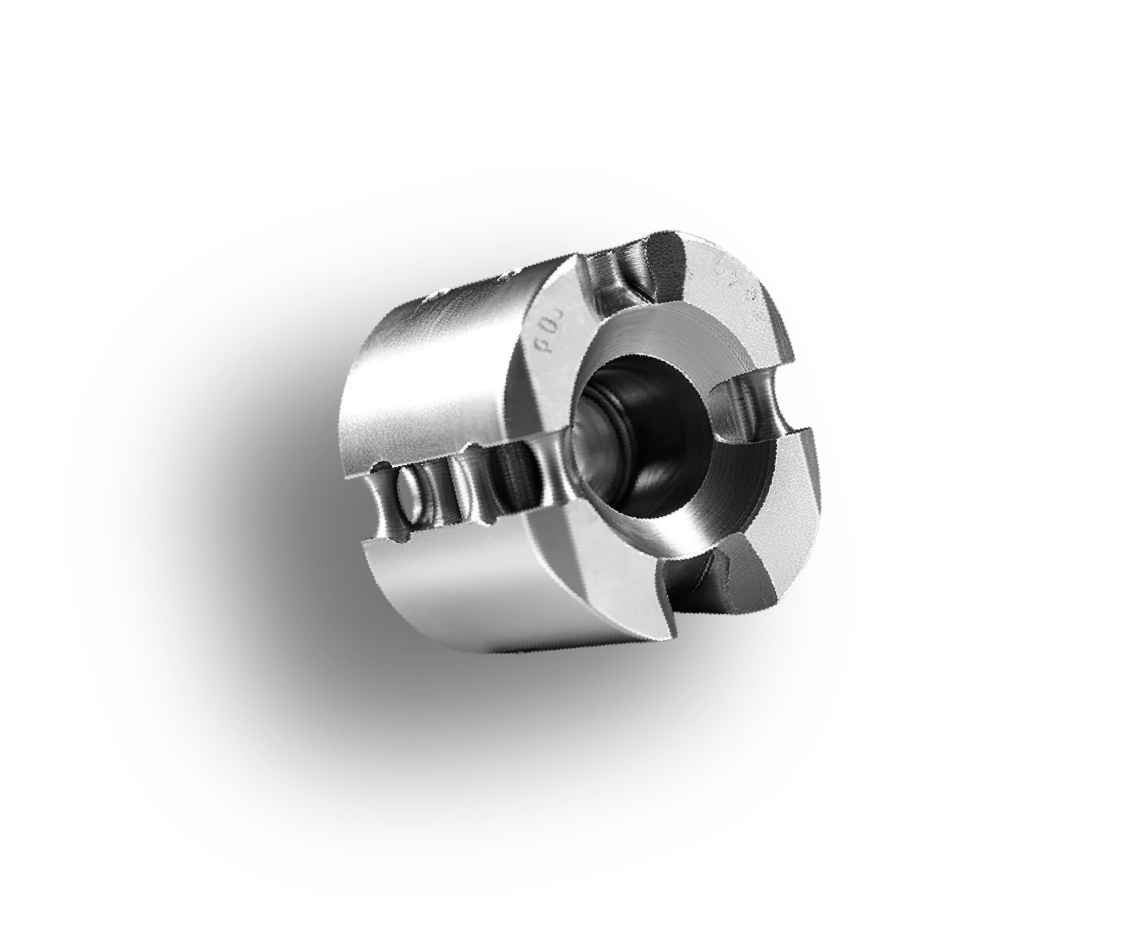
Housings for the brushless gimbal motor of each axis, with bearing bores, encoder seats and slip-ring bores for cables. We also machine standalone motor housings and bearing seats.

Bearing seats
Mounting and damping interfaces

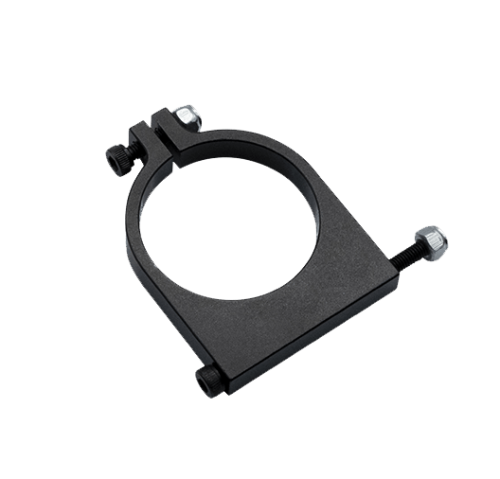
The interface between the gimbal and the airframe: gimbal mount plates with seats for vibration damping mounts, machined to your drawing with the rest of the gimbal set.

Gimbal mount plates

Manufacturing Process & Quality

  • Material Selection Featured Image
  • CNC Machining Featured Image
  • Deburring & Cleaning Featured Image
  • Surface Finish Featured Image
  • Final Inspection Featured Image
Material Selection
Alloy and temper taken from your drawing (7075-T6 and 6061-T6 aluminum first, titanium or stainless where the load asks for it), with material certificates available on request.
CNC Machining
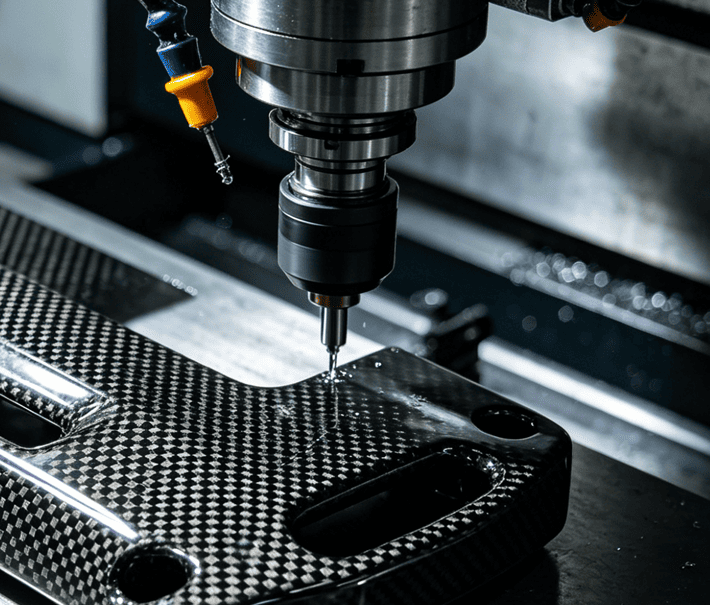
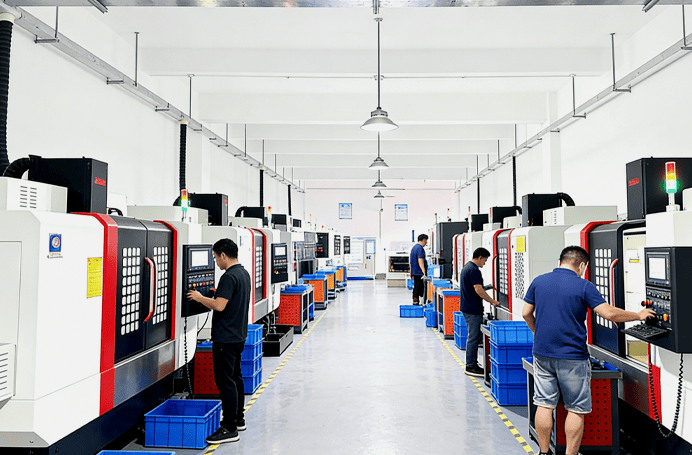
3-axis and 5-axis milling and CNC turning, with fixtures and toolpaths chosen for thin walls, flat seats and bolt patterns that must repeat from the first prototype to every batch.
Deburring & Cleaning
Edges broken and cable exits deburred as the drawing calls out, then parts cleaned so bores, threads and mating faces are free of chips and oil before finishing.
Surface Finish
Hard anodizing, black anodizing, chem film, electroless nickel or laser marking, applied as specified on the drawing, with masking of fits and threads where the callout requires it.
Final Inspection
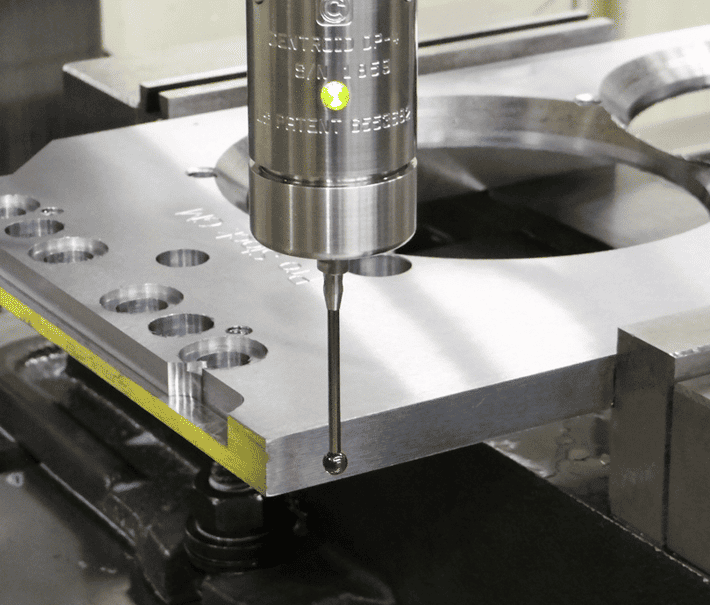
Bore coaxiality on each axis, perpendicularity between axes and flatness of sealing faces checked on CMM against the datums of your drawing (ASME Y14.5).

Gimbal housings to your drawing

Every gimbal part is machined to your drawing, from prototype and flight-test units to repeat batches built with the same programs, fixtures and inspection plan.

Bearing bore fits Icon
Bearing bore fits
Sealing grooves Icon
Sealing grooves
Optical window seat Icon
Optical window seat
Black anodizing Icon
Black anodizing
Request a Quote
  • Bearing bore fits Featured Image
  • Sealing grooves Featured Image
  • Optical window seat Featured Image
  • Black anodizing Featured Image

What matters in a drone gimbal housing

Axis alignment

The bearing bores of each axis must be coaxial, and the yaw, roll and pitch axes perpendicular to each other. That only holds if every part of the gimbal shares one datum structure, defined on the drawing and respected in every setup.

Gimbal balance

When the center of gravity of the moving assembly sits on the axes, the motors hold the camera with less current and less heat. Symmetric pocketing and controlled weight-sensitive features keep the balance from one batch to the next.

Thin walls and weight

Housings are pocketed down to thin walls; toolpaths, clamping and staged cutting are chosen to limit deformation. See thin-wall machining.

Sealing and EMI

O-ring and gasket grooves are machined to your drawing, with an IP rating to IEC 60529 when the design calls for one. Conductive mating faces help with shielding; background in EMI shielding enclosure design.

Heat and cables

The sensor electronics need a heat path to the housing, and cables need hollow shafts or slip-ring bores to pass through rotating axes. For balance and motor sizing, see CNC camera gimbals for drones.

Technical Specs

Specs Image
Parameter Specification
Part types Gimbal housings, camera enclosures, yoke arms, motor housings, bearing seats, mount plates
Materials 7075-T6 and 6061-T6 aluminum; Ti-6Al-4V (Grade 5); stainless steel; PEEK or acetal (Delrin)
Finishes Black anodizing (MIL-A-8625 Type II), hard anodizing (Type III), chem film (MIL-DTL-5541)
Other finishes Electroless nickel on precision wear parts; laser marking for payload IDs and revisions
Tolerances Bearing bores to customer fits (H7-type callouts); ISO 2768 general tolerances on the rest
Inspection CMM: bore coaxiality, perpendicularity between axes, sealing-face flatness (ASME Y14.5)
Traceability Material traceability and revision control from approved prototype to each batch
Quantities Prototype and flight-test units to repeat production batches
Files accepted CAD model and 2D drawing, formats to be confirmed
What is a gimbal housing on a drone?
It is the machined structure that holds the camera or sensor and the gimbal motors, bearings and electronics of a stabilized UAV payload; it sets the alignment of the gimbal axes.
What is the purpose of a gimbal on an industrial UAV?
A gimbal keeps the camera or sensor stable and pointed at its target while the drone moves, which is essential for mapping, inspection and security imaging.
Can you machine all the parts of a 3-axis camera gimbal?
Yes: housings, yoke arms, motor housings, bearing seats and mounting plates, machined to your drawings and inspected as a matched set.
Which material is best for a UAV gimbal housing?
7075-T6 aluminum is the usual choice for stiffness, weight and thin walls; titanium or stainless steel is used for small shafts and pins.
Can the housing be sealed or shielded?
Yes, we machine O-ring and gasket grooves and can apply a conductive chem film on mating faces; sealing level and EMI requirements come from your design.
What is the minimum order?
There is no minimum order: from prototype and flight-test units to repeat production batches.