Peter leads the transition from prototyping to mass production. He optimizes manufacturing for complex drone frames and actuators, ensuring lightweight designs meet rigorous aerodynamic and durability standards.
The performance, cost, and lifespan of a drone highly depend on the materials used to make its components. Understanding the right manufacturing method and how it can benefit the drone project is as important as the process of designing it.
This article will show a comparison of 3D Printing vs CNC Machining for Drone Parts that aims to help engineers and drone makers pick the right method to bring their drone designs to life.
What is 3D Printing?
3D printing, also known as additive manufacturing, is a method that builds components by adding layers and layers of materials based on a digital model. This technique is highly favorable for designers to create without limits in terms of design complexities and features, giving them a smoother transition from conceptualizing to prototyping.
Technology advancements now offer a broader range of materials extending 3D printing’s benefits not only for hobbyists but also for bigger industries. Materials can range from polymers to metals, as well as ceramics and composites.
The method of additive manufacturing shortens lead times for small batches and prototypes because it requires little tooling. Through post-processing and support are needed on some projects to achieve custom requirements, the method is still faster. At this age of modern drone technologies, it is a challenge to keep up with the costs to run large production runs, but with the help of technologies like this, it becomes easier and more practical for most industries.
The typical 3D printing methods include sheet lamination, material jetting, vat polymerization, powder bed fusion, direct energy deposition, binder jetting, and material extrusion.
Benefits of 3D Printing Drone Parts
Complex and Intricate Designs
Subtractive machining may not be able to do what additive methods can do, such as creating internal cavities, lattice structures, and optimizing complex geometries. All these can be done with 3D printing.
Minimal Material Waste
Minimal to zero wastage because only the materials needed will be consumed, and that means scraps are reduced compared to subtractive methods.
Rapid Prototyping
Smooth and fast transition from CAD to making parts, and that speeds up the turnaround times for prototypes.
Cost-Effective for Low Volumes
A practical choice of method for one-offs and small production runs because no fixtures and tools are required.
Design Flexibility
Compared to other designing methods and processes, digital revisions are quicker and cheaper, which makes customization a breeze. No retooling needed.
Lower Startup Costs
Startup funds will not cost a fortune because desktop and mid-range printers come at affordable capital costs and low operator skill demands.
Mass Customization
A more practical method for producing made-to-order components in small quantities.
Internal Structures and Complex Geometries
Enables features that may not be possible with other methods. Examples are honeycombs and conformal channels.
Examples of 3D Printed Drone Parts
It is possible to create a full 3D-printed drone, but many drone makers use the additive method exclusively for parts that are more beneficial in a practical sense in terms of custom geometries and easier replacements.
Frame
Frames and prop guards, as well as camera mounts, antenna mounts, and bumpers, can be 3D printed using flexible or reinforced materials. For impact-absorbing components, TPU is the common choice.
And for structural pieces where tougher and lighter combinations are needed, carbon fiber-filled nylon is the best choice. It is more practical to print small consumer parts, while high-end and performance parts are always paired with purchased carbon fiber components.
Propellers & Fins
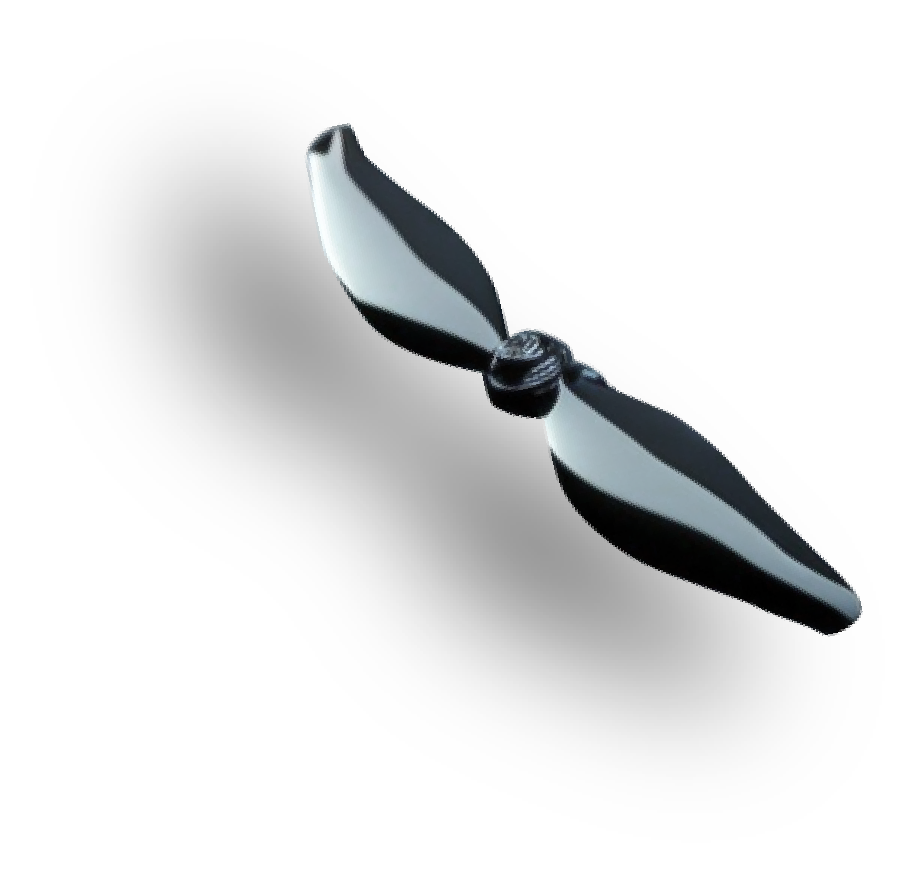
Racers and hobbyists are often the ones who use made-to-order propellers and fins. Nylon is the best choice for fins and aerodynamic essentials that help stabilize drones in flight and guide them in smooth maneuvers. Designers can try out various prop shapes to look for more efficient and quieter options.
Antenna & Camera Mounts
Antenna mounts are known for their vibration-damping feature, and are often made of TPU and other polymers. While camera mounts and gimbal plates need rigidity and precision, they rely on the use of PETG, ABS, or polycarbonate. FPV rigs that need perfect alignment rely on stiffer materials to keep up with rapid movement.
Functional Accessories
Additive methods enable functional accessories. Lightweight parts like gimbals and servo mounts, and even drop systems and payload mechanisms. Rigid printed parts are paired with cushions or dampers to protect sensors and lessen vibration.
Protective Gears
To shield sensitive components, designers can add reinforcement ribs and controlled zones into prints to ensure balance without adding more weight. Parts like motor covers, propeller guards, and landing pads are always preferably printed for designers to incorporate extra protection.
Types of 3D Printing Technologies
Material Extrusion (FDM)
Widely used for prototyping plastic parts, this technology heats thermoplastics through a nozzle.
Vat Polymerization (SLA, DLP)
This technique cures liquid resin from low to high detail applications, like jewelry making and dental applications.
Powder Bed Fusion (SLS, SLM, DMLS)
This is common for metals and polymers. It uses electron beams and lasers to combine powder into dense parts.
Binder Jetting
For added strength for finished parts, binder jetting deposits binder onto powder to cure it.
Material Jetting
This method is used to achieve a fine surface finish and desired colors through droplets of materials.
Direct Energy Deposition (DED)
For large metal builds and even repair works, this process is useful as it melts and deposits materials simultaneously.
Sheet Lamination
This one is for low-cost specialized applications. The method cuts and bonds sheets to create parts.
What is CNC Machining?
CNC or Computer Numerical Control machining is a subtractive process. A machine that is programmed makes finished parts out of solid blank materials. A CAD model directs speed, tool paths, and tool changes. This method boasts in its high-repeatability rate and its ability to mass-produce identical parts with tight tolerances.
CNC machine setups range from three-axis to five-axis mills that are advanced enough to cater to complex geometries in fewer setups. The common CNC machines have mills, drills, lathes, grinders, and plasma and laser cutters.
This method offers benefits like consistent quality per part, can machine a wide range of materials, and reduces human error. It is highly preferred in industries that require strict accuracy and material properties.
Benefits of CNC Machining Drone Parts
High Precision and Tight Tolerances
CNC is suitable for parts that need to fit precisely because it offers very fine dimensional control.
Material Versatility
Materials that need to retain their isotropic strength can be machined, such as metals and high-performance plastics.
Excellent Surface Finish
This serves as an advantage for metal parts because machined surfaces often require very little finishing.
Cost-Effective for High Volumes
The cost reduces as the batch size increases. Recommended for big-scale productions.
Durable, Isotropic Parts
This method produces components that have consistent mechanical properties from start to finish.
Repeatability
All production runs produce consistently identical parts, ensuring repeatability.
Capability for Larger Parts
Can machine large blanks into accurate components with custom dimensional requirements that are beyond most printer build volumes.
Material Integrity
This method reduces layer-bonding-related issues and preserves bulk material properties.
Common CNC Machines and Their Functions
CNC Mills
Widely used for plastics and aluminum, rotating cutters are used to remove materials to form complex 3D shapes.
CNC Lathes
Lathes are used to create shafts, spacers, and other symmetrical and cylindrical parts by rotating workpieces while cutting.
Drills
This machine is usually used in combination with milling operations to precisely place and size holes.
Grinders
Fine finishes with tight tolerances on hardened materials are produced using abrasive wheels.
Plasma and Laser Cutters
Plasma and laser cutters cut metal sheets accurately for parts such as frame plates and brackets.
Examples of CNC-Machined Drone Parts
Frames
Frames are commonly made of carbon fiber wrapped components and aluminum that offer rigidity and reliable precision that ensures a strong backbone for drones.
Arms
Machined arms are strong enough to carry delicate components like motors and propellers. To balance strength and weight, aluminum and reinforced composites are often used.
Propellers
For drones that are strict on stability and efficiency, machined propellers and hubs are recommended because they offer consistency and balance in performance and aerodynamics.
Motor Mounts
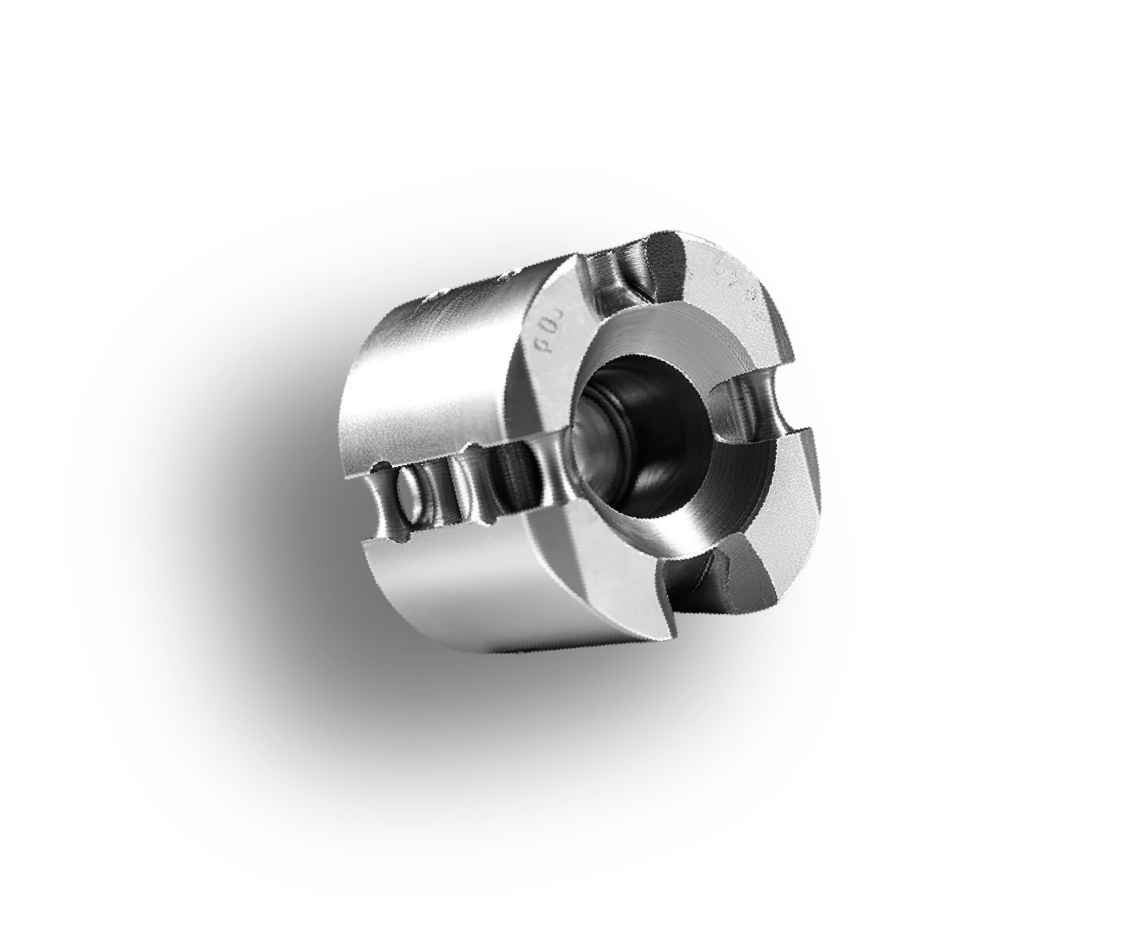
Motor mounts are expected to have perfect alignment to avoid excessive vibration and motor longevity issues. Machined mounts can secure the right fit through their precise tolerances.
3D Printing vs CNC Machining for Drone Parts
Process
Using computer-guided tools, CNC machining cuts from a solid blank, removing material up to its desired geometry. The entire process, including cutting speed, fixturing, and feeds, is all programmed in G-code. The subtractive method makes predictable mechanical properties.
On the other hand, 3D printing uses the additive method from the very bottom to the top layer of the digital model. Both technologies read toolpath data from CAD; however, they differ in the paths. CNC mills remove material while printers deposit and add layers of material.
Production Speed
With CNC, setup and programming can take up a lot of time for complex parts but once the run starts, the output is high. CNC produces faster per-part cycle for mid to large parts and boasts repeatable production once setup is complete.
3D printing is faster for prototypes that require minimal tooling and fixturing. But it may take time to build based on part volume and may not be the suitable choice for large batches of big components.
Setup, Operational, Maintenance Costs
CNC machining has quite costly upfront costs for tooling, cutters, coolants, and power consumption. Not to mention maintenance and skilled operators. It can be a little expensive, but when used in large production runs, the costs can be reduced per unit price.
3D printing offers lower tooling costs and simple maintenance. The consumable items like resin and such, are the ongoing costs. Additive systems for metals have higher costs and may even demand post-processing treatments.
Scalability and Production Volume
Economies of scale are where CNC machining thrives because once a program and setup are up and running, the method efficiently scales. That’s the reason why CNC is the choice for the continuous production of parts that are strict on consistency.
3D printing is also scalable for low-volume and extremely customized runs. But for mass production, this method must face material cost, build time, and other challenges in terms of approach and printers.
Materials Used
CNC has a broad range of materials, including various metals and plastics. These materials also keep up with the application requirements that aim for high performance and accuracy.
3D printing also caters to many plastics, and some metals, and also ceramics, and some composites. But pure metal methods are usually expensive and may also require further treatments to meet the demands.
Material Flexibility and Limitations
CNC machining can handle high-strength metals and hard-to-print alloys with relative ease. It is less constrained by melting points or powder handling challenges, making it suitable for superalloys and large structural parts.
Additive manufacturing provides unmatched geometric freedom but faces limits with certain high-temperature or high-strength alloys, the cost of metal powders, and anisotropy in layer-bonded parts. Designers can often make up for material limits with smart geometry, but some applications still favor machined parts for raw material performance.
Surface Finish
CNC-machined parts typically come off the machine with fine surface finishes and tight dimensional control. That often reduces finishing steps and speeds assembly.
3D-printed parts commonly show layer lines and may need sanding, media tumbling, or coating to reach the same finish quality, although technologies like SLA or material jetting offer smoother surfaces than basic FDM.
Post-Processing Requirements
Most machined parts normally need very minimal post-processing treatments. Some may only need light surface treatments. Metal parts may need heat treatment, and coating depends on the application.
Printed parts often need support removal and thermal stress relief for metals. Post-processing can be a must for high-performance applications, and that will impact lead time and costs.
Portability
CNC machines are generally huge and fixed in a workspace, while 3D printers can be desktop printers or large systems that offer placement options.
Safety and Compliance Standards
CNC runs require cooling management and PPE to minimize risks of hazardous chips and dust exposure. 3D printing has different hazards, like fume exposure from resin and powder. It is safe to conclude that both processes come with hazards that require proper handling and safety precautions to follow.
Comparison Table Between 3D Printing and CNC Machining
3D Printing
CNC Machining
Tolerance
FDM: ±0.2–0.5 mm, SLS: ±0.3 mm, Binder Jetting: ±0.2 mm.
±0.015–0.025 mm
Cutting Speed
Low setup time, build time can take hours
It may take ages to set up and program, but cutting can be very fast
Geometry
Broader design freedom
Limited by tool access
Part Size
Up to 1000×1000×1000mm
4000×1500×600 mm
Part Design
Not restricted by process constraints
Limited by undercut and internal access, tool path and type, axis-defined minimum radii, and the need for repositioning mid-task
Operator Skill
Low
Very High
Strength
Typically, 10–20% of native material
Usually stays at 100% of the native material
Eco-Friendliness
Yes
Yes
3D Printing vs CNC Machining for Drone Parts: Which One to Choose and When?
In reality, choosing between 3D printing and CNC machining depends on application demands. Choose 3D printing for rapid prototyping and custom parts with complex geometries. Go for CNC machining when you need large production level of consistency and tolerances, and if you need an almost perfect surface finish straight from the machine.
Choose 3D Printing when:
Rapid prototyping is needed
The project requires complex geometries and features
Small custom runs without the focus on per-unit costs
A hybrid design approach that needs to be paired with machined parts
Choose CNC Machining when:
Batch production that focuses on low per-part costs
The parts demand tight tolerances and consistency
The material needs to retain isotropic strength
When surface finish and other post-processing are not an option.
Conclusion
Choosing between 3D printing and CNC machining all comes down to a few important factors: volume, materials, geometry, and finish. To weigh the options, understand the demands of the drone application. DroneCNCParts offers both processes and can recommend a production plan tailored to your drone project needs.
For advice in planning and production, contact us for technical consultation and a customized plan that will match the performance and budget requirements for your drone projects.