Peter leads the transition from prototyping to mass production. He optimizes manufacturing for complex drone frames and actuators, ensuring lightweight designs meet rigorous aerodynamic and durability standards.
Drone (UAV) injection molding may sound complicated, but it’s all about filling molds with molten plastics to make parts for unmanned aerial vehicles or drones. It has been a go-to method for producing parts for industries because of its ability to create consistent products that are not only cost-efficient but also meet their turnaround time for their high-volume runs.
This guide will help us explore more about drone (UAV) injection molding, its advantages, materials, and applications.
Importance of Injection Molding in Drone (UAV) Manufacturing
Over the years, the purpose of drones is no longer hobbies and entertainment. More industries are using drones to carry out challenging tasks. That being in consideration, makers are now leaning towards what can prolong the lifespan of their drones while also making sure that it doesn’t bypass standards and quality tests. That’s where the importance of injection molding comes in because of its capacity to produce consistent parts that meet their requirements and the demand in volume.
In addition, this type of approach offers great help for large runs because it can mass-produce parts that are consistent in all aspects that any drone project requires. These factors make injection molding a breakthrough advancement in UAV technology.
Key Advantages of Drone (UAV) Injection Molding
Drone UAV injection molding is a preferred process because of the advantages it offers. From cost efficiency to design flexibility, industries value what this manufacturing process can offer. Here’s a rundown of its advantages:
Lightweight and Durable Materials
Because drones are devices that often require heavy-duty performance to carry on tasks, they are expected to be made of materials that can keep up with the challenges. This method of drone parts production is strict on delivering components that are lightweight and durable to make sure that drones are at their best, even in the worst conditions.
Cost Efficiency in Production
Large-scale productions vouch for the cost efficiency of a single mold that can mass-produce identical parts. This alone saves them a lot in production costs without the need to sacrifice quality and standards.
Enhanced Design Flexibility
Designs from different drones have their own complexities and are sometimes difficult to produce, but that’s not a problem with molding because it can handle designs that are usually challenging. The flexibility it provides is an ease for those who want to make sure that even the tiniest detail is fulfilled.
Advantages of Multi-Component and Overmolding Capabilities
The other thing that is refreshing about this process is the ability to combine colors and materials to produce a single part. It not only helps the appearance but also saves time and resources in assembly.
Types of Injection Molding Techniques for Drone Components
Plastic Injection Molding
This technique fills molds with molten polymers to come up with parts that are almost ready for assembly, based on the appearance and finish. Ideally used for propeller structures, housings, and frames.
Overmolding
Combining two materials to make one part is possible to enhance appearance and durability while saving time and assembly efforts, just like how soft rubber can be incorporated into hard plastic.
Gas Assist Injection Molding
To keep parts light, like arms and landing gears, gas is added shortly after filling the mold with molten plastic. Gas allows the material to occupy the mold instead of needing to add more material, which will add weight.
Rapid Tooling
This is useful for sample designs that are made before the actual run to mass-produce the parts. It uses tools that are easier to work with to produce parts without consuming too much time for a sample.
Materials Used in Drone (UAV) Injection Molding
The performance and life span of a drone rely on factors and materials is one of those. Drones with different purposes also demand different specifications, which is why choosing the right material still depends on how you understand the needs of your device to optimize its performance.
Common Thermoplastics
These are the plastics commonly used in this method, and they all meet the requirements in terms of durability, cost-efficiency, and fast production:
ABS: offers durability and impact resistance. Ideal for external housing and guards.
PC: Clear and strong. Suitable for camera lenses and protective covers.
PA6/PA6+GF: Strong and wear-resistant. Suitable for mechanical parts.
TPE: Soft and flexible. Ideal for grips and sealing components.
Nylon: Tough, lightweight, and abrasion-resistant. Commonly used for moving parts.
Polypropylene: Lightweight and chemical-resistant. Used in non-load-bearing parts.
High-Performance Materials
These materials are for drones that require specific requirements for heat resistance and durability:
Carbon-Fiber‑Reinforced Plastics (CFRP): Strong and lightweight. Ideal for drone frames and arms that require stiffness without extra weight.
PEEK: Heat and chemical-resistant. Used in critical components for industrial drones.
PPS: Stable and heat-resistant. Suitable for electrical housings and parts exposed to high temperatures.
Glass‑Fiber Nylon: Rigid and durable. Used in load-bearing parts like brackets, motor mounts, and structural support.
Common Injection Molding Challenges & Solutions
Incomplete Filling
When a melted plastic failed to completely fill the mold, caused by factors like design complexity and low injection pressure, it creates gaps in the final product. To keep this from happening, it may require mold redesigning or increasing the pressure.
This happens when melted plastic doesn’t completely fill the mold, creating gaps in the final part. This may be caused by various reasons, such as design complexity and low injection pressure, and speed. To avoid this from happening, increase the injection pressure or redesign the mold.
Warping
Warping happens when there is an inconsistency in cooling rates. This causes other parts to twist or bend. This affects the final size of the part. Making adjustments in the cooling time and mold temperature, and choosing materials that don’t easily shrink, will avoid this issue.
Shrinkage
Shrinkage happens when the plastic cools and contracts after being injected into the mold, causing the final part to be slightly smaller than intended. This can lead to fitting issues or uneven surfaces. To reduce shrinkage, you can adjust cooling times, use materials with lower shrink rates, or redesign the mold to account for expected size changes.
Surface Defects
Defects that include blemishes, uneven textures, not only affect the appearance but also the performance. Surface defects are often caused by improper cooling and poor material quality. This can be avoided if smoother molds and better cooling methods are reinforced.
Incompatible Material Pairing
Issues like this usually happen in overmolding when two materials fail to combine well with each other, causing peeling of parts or even breakage. Stronger bonds for two combined materials can be ensured if you choose chemically and thermally compatible materials.
Mold Wear
This happens due to the mold wearing down due to excessive pressure and repeated cycles. It will cause inconsistent parts and longer production times. The solution is choosing high-quality molds and ensuring regular maintenance to enhance the mold’s performance and prolong mold life.
Applications of Injection Molded Parts in UAVs
Drone Propellers and Blades
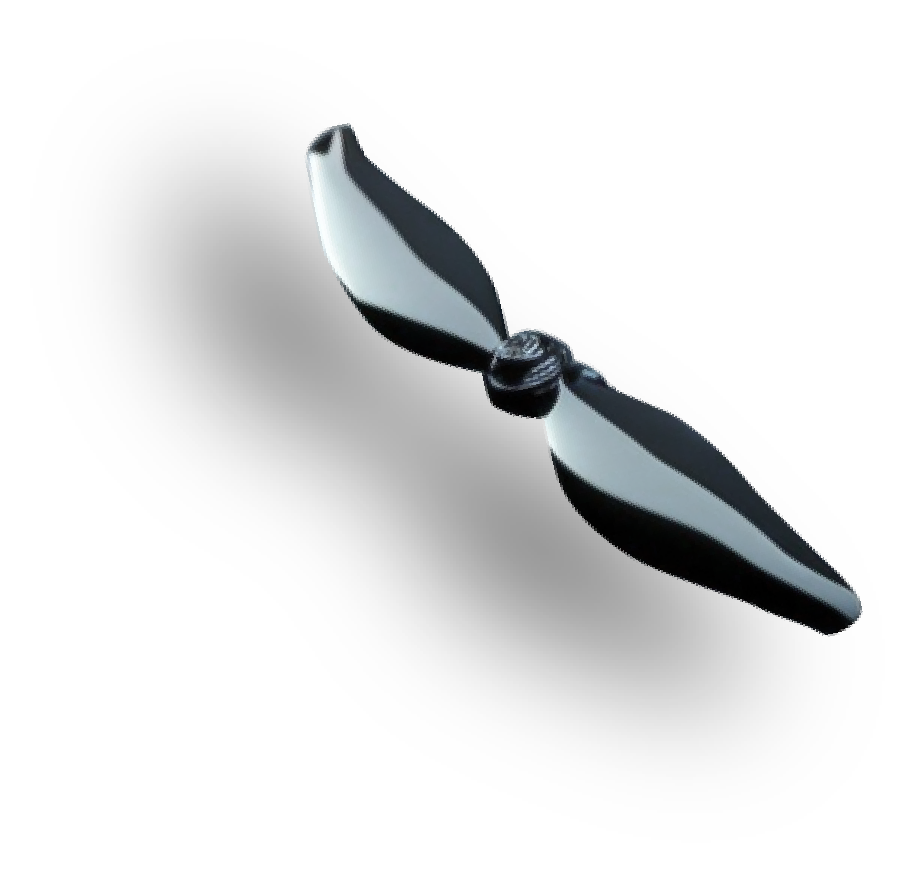
To ensure stable flight, the propellers and blades must be balanced and lightweight. With injection molding, consistent and identical parts such as propellers and blades can be produced repeatedly with consistent quality each run. Nylon is often the material of choice for its flexibility, strength, and shock resistance.
Main Body Components
The main body carries the most important parts of the drone, which is why this part needs to be extra strong but still light enough to carry out flights and protect internal parts. With injection molding, you can create streamlined, aerodynamic shapes and incorporate multiple mounting features into a single piece, simplifying assembly and making sure the material is lightweight.
Interior Sealing Components
The challenging environment during flights makes the drones prone to moisture, dust, and high temperatures. interior sealing components, such as gaskets and covers, protect the electronics from environmental damage. TPE is used to create seals to keep sensitive parts secure.
Conclusion
The drone manufacturing industry benefits from injection molding because of its ability to produce efficient and consistent parts, especially for mass production. From propellers to protective structures, drone UAV injection offers consistent results.
At DroneCNCParts, we specialize in advanced drone (UAV) injection molding solutions that meet your standards and product specifications. Talk to our experts so we can get started with your dream UAV project.